

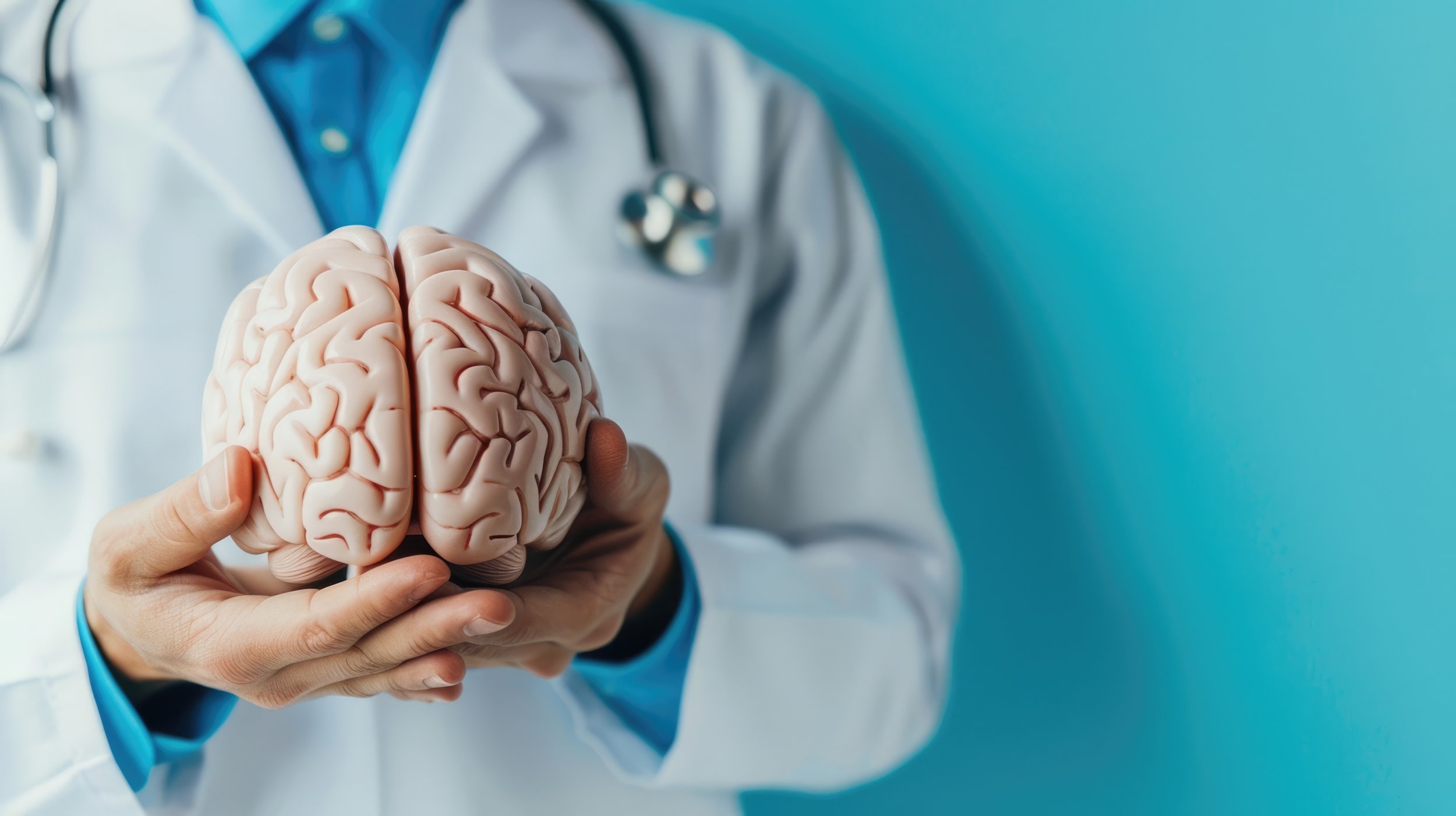
Become a Brain Donor
You could help researchers unlock the next breakthrough.
Why Donate Your Brain?
We encourage people with brain diseases and healthy brains to consider making a brain donation. Brain donation is an important part of advancing Alzheimer's disease research. Donated tissues provide researchers with invaluable material for understanding disease processes, testing promising drugs, investigating groundbreaking treatment strategies, and refining existing therapies. Donating your brain can help:
1
2
To get a diagnosis. Many brain diseases, including Alzheimer’s disease, can only be definitively diagnosed through a postmortem tissue examination.
To support brain disease research. By donating your brain, you contribute to research on the causes, treatments, and cures for brain diseases.
At the forefront of cutting-edge research and groundbreaking discoveries is the Carroll A. Campbell, Jr. Neuropathology Laboratory (CCNL) at MUSC. The CCNL proudly boasts over 330 dedicated donors who have selflessly contributed to advancing our understanding of the human brain. Through the generosity of the donors and their families, the CCNL showcases a diverse range of donors, from individuals affected by Alzheimer's disease and related dementias to those cognitively intact and free from any neurodegenerative conditions.

The Carroll A. Campbell, Jr. Neuropathology Laboratory (CCNL) was founded in 2009 to enhance postmortem diagnostics and research on healthy aging and neurological disorders.
As the only repository of brain tissue samples in the state, the CCNL at MUSC is fueling scientific progress in the quest to solve the mysterious complexities of neurological disorders. The CCNL supports research across South Carolina, the country, and abroad.
To learn more about the CCNL and brain donation at MUSC, please visit their website.

Frequently Asked Questions
-
Brain donation is important for several reasons. First, it provides researchers with invaluable samples to better understand the effects of Alzheimer's disease and related dementias. Second, performing a brain autopsy is the only way to obtain a definitive diagnosis for these diseases. This can help provide closure and piece of mind to family members. Finally, brain donation can offer a gift of hope for future generations.
-
There is no fee to donate your brain. The Carroll A. Campbell, Jr. Neuropathology Laboratory at MUSC covers all of the costs associated with brain donation, including transportation, procurement, and the full study.
-
Yes, you can still donate your brain to the Carroll A. Campbell, Jr. Neuropathology Laboratory even if you do not have a diagnosed neurodegenerative disease. Studying healthy brain tissue is just as important as studying tissues with disease pathology.
-
Every brain that is donated is examined by a neuropathologist. Gross and microscopic examinations are completed and an autopsy report is completed.
All remaining samples are stored indefinitely in the CCNL for future studies. CCNL donors have supported researcher throughout South Carolina, the United States, and across the world.
-
The time it takes to complete the autopsy report varies from case to case. It is impossible to provide an exact timeframe for when a family can expect the report because every case is different.
The CCNL completes the report as quick as it can, while still providing a thorough examination.
If you have any questions regarding your loved one’s report, please contact the Carroll A. Campbell, Jr. Neuropathology Laboratory at 843-792-7867 or ccnl@musc.edu.
-
The autopsy report includes the findings of our microscopic and gross examinations, along with a letter from our neuropathologist summarizing his findings. The letter will contain links to reputable websites to learn more about your loved one's diagnosed condition(s).
We encourage you to take your report to your physician for further guidance on what the diagnosis means for your family members.
-
Yes, you can still have a funeral if you donate your brain. The procurement process is done carefully and does not affect your appearance, nor will it delay your funeral arrangements.
-
Once the procurement is completed, the CCNL staff will arrange transportation to your funeral home of choice.
-
To become a donor, simply complete the Donor Registration Form located on the Carroll A. Campbell, Jr. Neuropathology Laboratory’s website and return it via mail or email. Their staff will add you to the donor database and you will receive a welcome letter and personal donor card indicating your enrollment in our program.
We encourage you to share your wish to be a brain donor with your family and friends.
For more information on brain donation, contact the CCNL at 843-792-7867 or ccnl@musc.edu.